
If belly fat is proving hard to lose or you still feel tired after a night’s sleep, you may wonder whether stress and high cortisol are to blame. Health and beauty advice sometimes presents lowering this hormone as a shortcut to a leaner body or younger-looking skin.
Cortisol helps maintain blood sugar and blood pressure and supports the body during activity. Its levels normally rise around waking and during exercise; a lower reading is not automatically better. At the same time, some disorders involve prolonged cortisol excess, and researchers are studying how its daily rhythm relates to health.
How much attention does cortisol deserve if you want to stay strong and energetic as you age? Research on belly fat and aging can help put everyday choices about exercise, food, sleep, and testing in perspective.
AT A GLANCE
- Cortisol helps your body meet everyday demands. It rises around waking and during exercise, helping make energy available when it is needed.
- Its daily rhythm matters as well as its level. In people who are active by day and sleep at night, cortisol is generally higher in the morning and lower at night. Researchers also study the decline between the two.
- Belly fat and fatigue have many possible causes. Abdominal fat or sleep difficulties alone cannot tell you that cortisol is high.
- Sleep and recovery can guide practical changes. Look at whether you are regularly short of sleep or struggling to recover from exercise. Discuss persistent symptoms with a healthcare professional.
Your body needs cortisol
Cortisol is made by the adrenal glands, the small glands above your kidneys. The Endocrine Society describes its roles in regulating blood sugar, metabolism, blood pressure, and inflammation. It helps keep energy available between meals and helps regulate the body’s response to infection and injury.
Signals from the brain control cortisol release, while the body clock and stress also influence it. Adrenaline and other signals contribute to responses such as a faster heartbeat when you feel nervous. The nervous system and several hormones work together when the body responds to stress.
Why the time of day matters
For people who are active during the day and sleep at night, cortisol starts rising in the early hours and is generally high in the morning. A further rise often follows waking, before levels decline across the day and reach a low point in the early part of the night. As a review of cortisol’s daily rhythm explains, this is part of the body’s normal preparation for daytime activity.
A morning reading and a nighttime reading therefore need different interpretations. Night shifts, jet lag, and sleep timing can also alter the pattern. A claim that cortisol is “high” needs context: when was it measured, and under what conditions?
| What to distinguish | What is happening | What it means for you |
|---|---|---|
| A temporary rise around waking or during exercise | A response that helps the body wake up, be active, or meet a physical demand | A rise alone is no reason to avoid exercise. |
| A change in daily rhythm, such as a smaller morning-to-evening decline | A pattern studied in relation to sleep, stress, and illness | Sleep and daily habits may warrant attention, but tiredness alone cannot reveal an abnormal cortisol rhythm. |
| A disorder involving prolonged excessive cortisol activity | A condition such as Cushing syndrome that requires medical assessment and treatment | A combination of characteristic symptoms calls for medical advice, rather than relying on food and rest alone. |
The response to long-term stress varies, too. A meta-analysis of chronic stress and hormone activity found that factors such as the type of stress and how long it had lasted helped explain differences in cortisol patterns. Feeling more stressed does not necessarily mean cortisol is high all the time.
How much can cortisol explain about belly fat and skin?
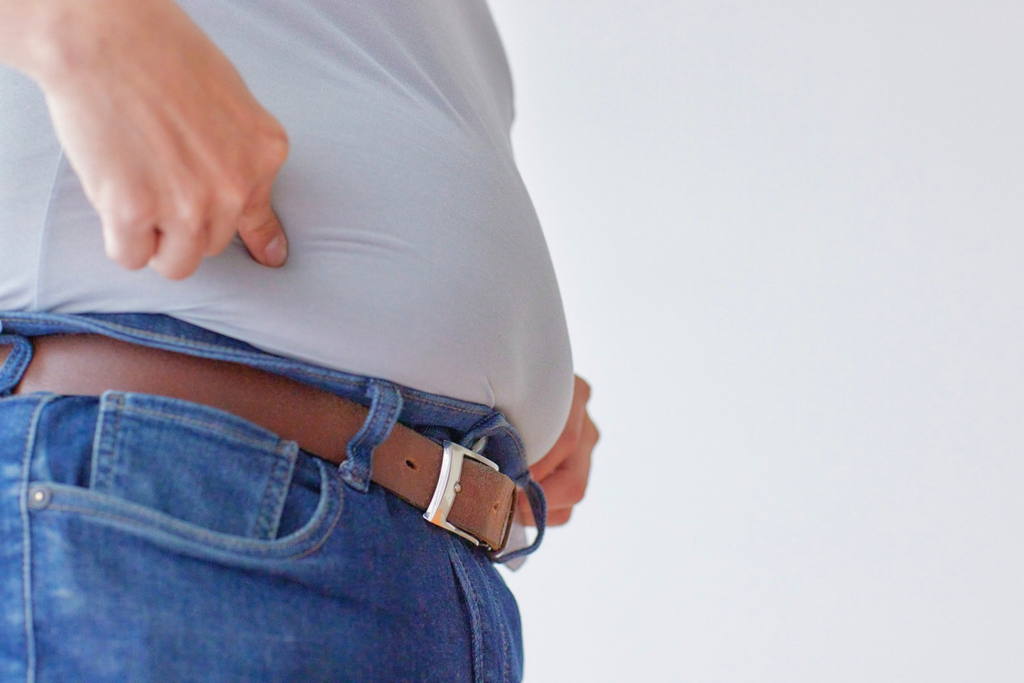
Prolonged excessive cortisol activity can contribute to fat accumulation around the abdomen and face, loss of muscle strength, weaker bones, and thinning skin. Cushing syndrome is a clear example, as explained in the National Institute of Diabetes and Digestive and Kidney Diseases (NIDDK) guide.
That degree of excess is very different from a temporary rise during a busy day. Changes seen in a hormone disorder cannot simply be used to explain everyday stress-related weight gain or skin aging.
What studies in the general population show
In a UK study of 2,527 adults aged 54 to 87, people with higher cortisol concentrations in their hair tended to have greater body weight and waist circumference. Hair cortisol is used to study exposure over a longer period than a single momentary measurement.
The main analysis compared cortisol and body size measured at the same time. It showed an association, but could not establish which came first: higher cortisol followed by fat gain, or changes in hormone activity associated with obesity.
If your body shape is changing, food intake, physical activity, muscle mass, sleep, and medication may all deserve attention. Treating cortisol as the sole explanation can draw attention away from useful changes to your diet or activity. Keeping track of food and exercise, alongside blood sugar and blood pressure results from routine checkups, can give you a clearer picture.
Does lowering cortisol slow aging?

The daily pattern has attracted particular interest in research on cortisol and health. A 2017 analysis of 80 studies found a small overall association between a flatter morning-to-evening decline and poorer physical and mental health. A flatter decline can reflect higher evening levels, but it can also occur when morning levels are lower and the gap between morning and evening is smaller.
Some research has followed people’s health over time. In a UK study of 4,047 men and women followed for an average of 6.1 years, a flatter decline was associated with a higher risk of death from any cause and from cardiovascular disease. Morning cortisol levels did not show the same association.
These findings link the daily rhythm with long-term health, but they are not experiments testing whether lowering cortisol extends life. Existing illness or lifestyle factors could influence both cortisol patterns and health outcomes.
Lowering cortisol has not been established as a way for otherwise healthy people to reduce wrinkles, preserve muscle, or live longer. Maintaining strength, sleeping well, and keeping blood sugar in a healthy range are practical goals you can assess. A change in a hormone level and an improvement in health are separate outcomes.
Exercise and diet: look beyond a change in cortisol
A post-exercise rise is no reason to stop strength training
Cortisol can rise temporarily in response to exercise. An experiment comparing different exercise intensities found increases under higher-intensity conditions. This response helps support activity; a rise after a workout does not, by itself, show that you are losing muscle or aging faster.
Recovery is a more useful guide to adjusting your training. If you repeatedly struggle with weights you normally handle, or fatigue persists alongside poor sleep or changes in mood, review your training load as well as your food intake and rest.
A joint consensus statement from the European College of Sport Science and the American College of Sports Medicine emphasizes the combination of excessive training and inadequate recovery. No single measure, including a hormone level, is enough to diagnose overtraining syndrome.
For example, during a demanding workweek when sleep is being squeezed, you could reduce the number of sets or include lighter sessions instead of pushing to your limit every time. Our guide to strength training and healthy aging looks at ways to match training to your ability and recovery.
Fasting, cortisol, and changes in body fat
A diet cannot be judged by its hormone response alone. A meta-analysis of fasting and calorie restriction found a temporary rise in blood cortisol with fasting, while less severe calorie restriction did not produce a significant increase.
A short-term rise does not establish that a particular approach will cause weight gain over time. During weight loss, consider changes in weight and waist circumference alongside daytime energy, exercise performance, and whether the eating pattern is sustainable.

When choosing food, consider what restriction may be leaving out of your meals. If cutting calories has meant skipping protein-rich foods, bring back sources such as fish, eggs, or tofu. If snacks are replacing meals, adding nuts or fruit alone may not be enough; make room for meals that include both protein-rich foods and a source of carbohydrate.
For a food or supplement advertised as “cortisol-lowering,” ask who was studied and what improved. A change in blood or urine measurements does not, on its own, tell you whether the product will help your body composition, skin, or future health.
Coffee: pay attention to sleep and how you feel
Caffeine can temporarily increase cortisol. To decide whether to change your coffee habit, look at how much you drink, when you drink it, and its effects on sleep and how you feel.
The National Heart, Lung, and Blood Institute (NHLBI) notes in its sleep guidance that caffeine’s effects can last around eight hours. If you have trouble falling asleep, try moving an afternoon coffee earlier or switching to decaf, and pay attention to any change in your sleep.
If you reach for coffee or an energy drink every time you feel tired, also look at whether you have enough time to sleep. Repeatedly using caffeine to get through sleep-deprived days can make it easier to overlook the demands that are keeping you from resting.
Look for the demands that are crowding out recovery
Patterns in how you feel can help you choose practical changes without trying to guess a hormone level. If mornings are difficult, consider not just bedtime but also when work ended, when you last had caffeine, and whether you trained late.
If getting up early to exercise means regularly cutting sleep short, first make room for enough sleep. Seven to nine hours a night is a general guide for adults. If you have enough time in bed but still cannot sleep, simply going to bed earlier may not solve the problem. Our article on sleep duration, restfulness, and regularity explains how to approach different sleep difficulties.
It also helps to distinguish between finding a few minutes for breathing exercises or a walk and needing to reduce the workload itself. If late messages keep eating into sleep, setting a time to stop responding or sharing responsibilities may make more room for rest. Our guide to stress and healthy aging offers further ideas for managing ongoing demands and making time to recover.
When is cortisol testing worth discussing?
Fatigue or a change in weight alone cannot tell you whether cortisol is excessive. If symptoms persist despite changes to your routine, or you have unexplained weight changes, discuss them with a healthcare professional. A clinician can also assess other possible causes, including sleep problems or low mood.
A combination of symptoms that develops or worsens, such as easy bruising, wide purple stretch marks, or weakness when rising from a chair, is a reason to consider a hormone disorder among other possible causes. Cushing syndrome can result from excess cortisol produced by the body or from steroid medicines that act like cortisol. Tell your clinician about any medicines you use, and do not stop prescribed steroid treatment without medical advice.
The Endocrine Society’s diagnostic guideline recommends deciding who needs testing based on symptoms and other clinical information, then choosing an appropriate method, such as late-night saliva samples or urine collected over 24 hours. A random blood cortisol measurement is not recommended as a test for Cushing syndrome.
Saliva tests do have a role in medical care, but the purpose and collection conditions matter. A single result from a home test should not be treated as a score for everyday stress or the pace of aging.
The Endocrine Society also cautions against “adrenal fatigue,” the unsupported idea that chronic stress wears out the adrenal glands until they can no longer make enough hormones. Adrenal insufficiency, in which the body does not produce enough cortisol, is a different condition requiring medical diagnosis and treatment.
What you can do today
- Keep a brief record for about a week. Note how long you slept, when you had caffeine, and how demanding your exercise was, along with fatigue the next day. The aim is to spot patterns you can act on.
- Make one change based on your notes. If afternoon coffee seems to affect your sleep, move it earlier. If you are training hard while regularly cutting sleep short, allow more time for sleep and ease your training load.
- Describe persistent symptoms clearly. Note when fatigue began or when you noticed changes in your weight or strength, and how things have developed since. These details can help your clinician investigate the cause.
References
- Endocrine Society. Adrenal Hormones. An overview of cortisol’s functions and problems involving excess or deficiency.
- Nicolaides NC, et al. (2017). Stress-Related and Circadian Secretion and Target Tissue Actions of Glucocorticoids: Impact on Health. Frontiers in Endocrinology, 8, 70. A review of daily rhythms and the stress response.
- Miller GE, et al. (2007). If it goes up, must it come down? Chronic stress and the hypothalamic-pituitary-adrenocortical axis in humans. Psychological Bulletin, 133, 25–45. A meta-analysis examining differences in responses to chronic stress.
- Jackson SE, et al. (2017). Hair cortisol and adiposity in a population-based sample of 2,527 men and women aged 54 to 87 years. Obesity, 25, 539–544. Associations between hair cortisol, body weight, and waist circumference.
- Adam EK, et al. (2017). Diurnal cortisol slopes and mental and physical health outcomes: A systematic review and meta-analysis. Psychoneuroendocrinology, 83, 25–41. An analysis of 80 studies.
- Kumari M, et al. (2011). Association of diurnal patterns in salivary cortisol with all-cause and cardiovascular mortality: findings from the Whitehall II study. Journal of Clinical Endocrinology & Metabolism, 96, 1478–1485. An observational study of daily cortisol patterns and mortality risk.
- Hill EE, et al. (2008). Exercise and circulating cortisol levels: the intensity threshold effect. Journal of Endocrinological Investigation, 31, 587–591. Exercise intensity and temporary hormone responses.
- Meeusen R, et al. (2013). Prevention, diagnosis, and treatment of the overtraining syndrome: joint consensus statement of the European College of Sport Science and the American College of Sports Medicine. Medicine & Science in Sports & Exercise, 45, 186–205. Guidance on training load, recovery, and assessment.
- Nakamura Y, et al. (2016). Systematic review and meta-analysis reveals acutely elevated plasma cortisol following fasting but not less severe calorie restriction. Stress, 19, 151–157. A comparison of fasting and less severe calorie restriction.
- Lovallo WR, et al. (2005). Caffeine Stimulation of Cortisol Secretion Across the Waking Hours in Relation to Caffeine Intake Levels. Psychosomatic Medicine, 67, 734–739. Cortisol responses to caffeine intake.
- NHLBI. Healthy Sleep Habits / How Much Sleep Is Enough? Public guidance on sleep duration, caffeine, and daily routines.
- NIDDK. Cushing’s Syndrome. Symptoms, causes, and diagnosis of excessive cortisol activity.
- Endocrine Society. Diagnosis of Cushing’s Syndrome Guideline Resources. Who should be tested and which methods are recommended.
- Endocrine Society. Adrenal Fatigue. Distinguishing “adrenal fatigue” claims from recognized medical conditions.