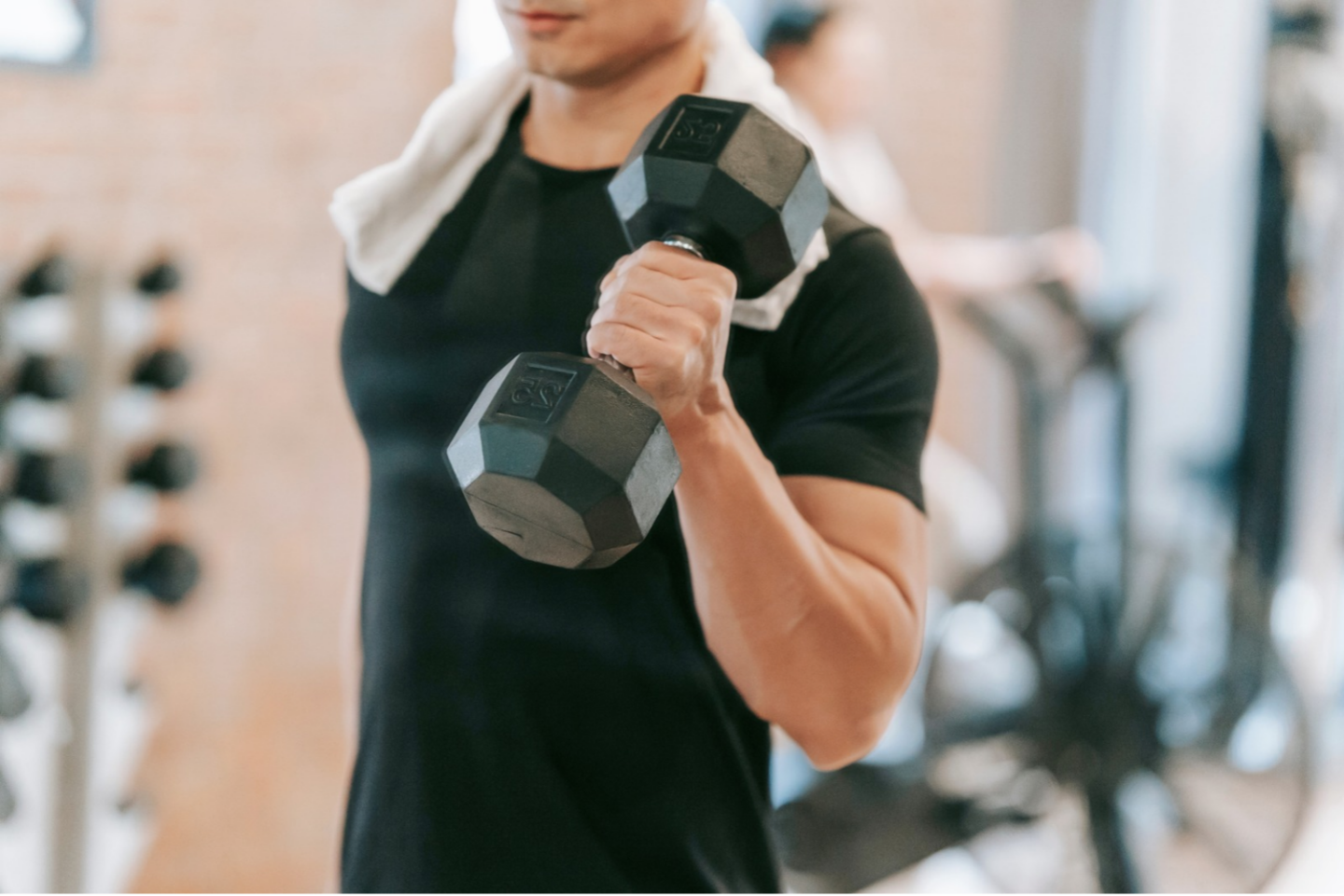
Clothes can fit differently even when your weight stays much the same. The balance of muscle and fat is one reason to look beyond the scale. Strength training offers a way to build muscle, improve your physique and develop strength.
Strength training makes your muscles work against resistance, whether that comes from weights or your own body. From squats and push-ups to dumbbell and machine exercises, you can choose an approach that fits your experience and goals.
Its benefits also extend to blood sugar regulation and bone health. Building muscle and supporting physical function can help you stay active as you age. With that in mind, we look at the evidence on strength, physique, skin health and longevity.
AT A GLANCE
- Build muscle and strength to improve your physique. Consider muscle, body fat and what you can lift alongside the number on the scale.
- Strength training also supports metabolic and bone health. Research has examined its effects on blood sugar, blood pressure and bone density.
- Researchers are also studying skin and long-term health. Studies have reported improvements in skin elasticity and an association between a strength-training habit and lower mortality risk.
- Train the whole body in a way that suits your goals and experience. Aim to work all the major muscle groups at least twice a week, with resistance and workload matched to your goals and enough time for recovery.
Building muscle and strength
Strength training can increase both muscle size and strength. Visible muscle development is one sign of progress; being able to handle a heavier load with control in a squat or dumbbell exercise is another.
The American College of Sports Medicine’s 2026 guidelines draw on 137 research reviews and conclude that resistance training improves strength, muscle size and physical function in healthy adults. Benefits have been found with resistance bands as well as with dumbbells and machines.
When building your fitness, it helps to consider both how your body looks and how it performs in sport and daily activities. The weight you can lift and the control you bring to a movement offer ways to recognize progress beyond changes on the scale.
The Danish LISA trial’s long-term follow-up offers another perspective on maintaining strength. The trial assigned 451 adults around retirement age to three groups for a one-year intervention. At the assessment four years after the study began, 369 participants returned. Those originally assigned to supervised heavy resistance training had maintained their average baseline leg strength, assessed with the knee held still. These were relatively healthy older adults, providing evidence that strength can still respond to training later in life.
Body composition: changes the scale may miss
It is natural to watch your weight when you want to change your physique. Yet people at the same weight can have different amounts of muscle and fat. Body composition—the amounts and proportions of tissues that make up your body—adds useful context to the number on the scale.

By pooling the results of studies in healthy adults, a meta-analysis found that resistance training alone reduced body fat percentage, total fat mass and visceral fat compared with no exercise. The average difference in body fat percentage was about 1.5 percentage points—the difference between 30% and 28.5%, for example. These findings support strength training as a way to improve body composition, even when substantial weight loss is not the aim.
At times when your weight barely changes, your clothes may fit differently or a familiar movement may feel easier. To track your physique, note your waist measurement or how your clothes fit. To track strength, record how many repetitions you can perform with the same weight. Keep your technique and range of movement consistent when comparing repetitions.
Working your muscles supports metabolic health
Muscle does more than produce movement. It is a major site for using glucose, the sugar circulating in your blood, and plays an important role in blood sugar regulation. Regularly working your muscles can support metabolic health as well as strength.
A scientific statement from the American Heart Association describes favorable effects of resistance training on blood pressure, blood sugar, blood fats and body composition, alongside gains in muscle mass and strength. Training your muscles is also a way to support cardiovascular health.
Blood pressure provides a useful example. A 2023 meta-analysis of 270 randomized trials involving 15,827 participants examined several forms of exercise, including aerobic and resistance training. Dynamic resistance training—moving against a load, such as lifting and lowering a weight—reduced systolic blood pressure, the top number, by an average of about 4.5 mmHg and diastolic pressure, the bottom number, by about 3 mmHg compared with no exercise. The results support regular strength training as a way to help improve resting blood pressure.
Combining aerobic exercise, such as walking or running, with whole-body strength training supports both cardiovascular fitness and muscle development. A routine begun for your physique can also benefit blood sugar and blood pressure regulation.
Looking after bones alongside muscles
Bone, like muscle, responds to the loads placed on it. Bone health deserves attention as part of training, particularly for women after menopause, when hormonal changes make bone loss more likely.
In Australia’s LIFTMOR trial, 101 postmenopausal women with low bone mass took part in an exercise study. Supervised high-intensity resistance and impact training, twice a week for eight months, produced better results for bone density, including at the lower spine, and physical function than a low-intensity home exercise program.
The program combined resistance exercises with impact movements such as landings, with professionals supervising the loads and technique. Exercise selection matters when training for bone health. If you have osteoporosis, discuss suitable movements and loads with a healthcare professional.
What research suggests about skin health
Skin is another area of interest in the relationship between exercise and a youthful appearance. A 2023 study in Scientific Reports compared aerobic exercise with resistance training in Japanese women aged 41–59 who had not been exercising regularly. Both programs ran twice a week for 16 weeks, and data from 56 women were analyzed.
Both groups showed improvements in measurements of skin elasticity and the structure of the upper dermis. The dermis lies beneath the skin’s outer surface and contains collagen. The findings suggest that regular exercise may also influence skin condition.

The study did not include a group that did no exercise, and it did not assess how old participants looked. Improvements in skin measurements do not establish that strength training produces a visibly younger appearance. Compared with the evidence on muscle and body composition, research on skin remains limited.
Supporting your mood and confidence in your body
Lifting a heavier dumbbell or completing more repetitions with the same weight gives you a tangible sense that your body is changing. While you wait for visible changes in your physique, that progress can make training rewarding in its own right.
Mental health has also been studied. A meta-analysis of 33 randomized trials involving 1,877 people, published in JAMA Psychiatry in 2018, found that resistance training reduced depressive symptoms. These trials assigned people at random to training or comparison groups. Improvements in strength were not clearly related to the size of the effect on symptoms.
Strength training can support your mood. Choose exercises you enjoy and a routine that fits your week. If low mood persists, seek professional support alongside your efforts to stay active.
What does research say about strength training and longevity?
A large US study published in 2026 followed 147,374 people in three long-term study groups for up to 30 years. Compared with no resistance training, doing 90–119 minutes a week was associated with a 13% lower relative risk of death from any cause during follow-up, after statistical adjustment for factors including aerobic activity.
This was an association between a training habit and mortality, rather than a trial directly testing whether strength training extends life. People who exercise can also differ in diet and underlying health, and those influences cannot be fully removed from the analysis. Alongside exercise trials on strength and blood pressure, the findings provide another reason to consider resistance training part of a healthy routine.
How often should you train?
The WHO physical activity guidelines recommend working all the major muscle groups at moderate or greater intensity on at least two days a week. The American College of Sports Medicine’s 2026 update also emphasizes regular participation over the pursuit of a complicated training plan.
Training the whole body twice a week is one option. If you prefer to train different muscle groups on different days, arrange your sessions so that you train each major muscle group at least twice a week. Your schedule will depend on your goals, experience, how much work you do in each session and how well you recover. To build more muscle or strength, consider the resistance and number of sets as well as how often you train.
Aerobic activity belongs alongside strength work. For adults, WHO recommends 150–300 minutes of moderate-intensity aerobic activity, 75–150 minutes of vigorous activity, or an equivalent combination each week. Brisk walking, running and cycling offer options to combine according to your fitness and preferences.
Choose exercises for your legs, chest and back
To train the whole body, include exercises that challenge your chest, shoulders and back as well as your legs and glutes. The table below gives examples to choose from. Body-weight movements, dumbbells and machines can all offer ways to apply resistance that suits your current strength.
| Main areas worked | Exercise options | How to adjust the challenge |
|---|---|---|
| Legs and glutes | Squats, lunges, leg presses | Choose body-weight exercises, dumbbells or machines that let you challenge your legs while maintaining control of the movement. |
| Chest, shoulders and arms | Push-ups, dumbbell chest presses, machine chest presses | For push-ups, change the height of your hands or use a kneeling variation. For presses, adjust the weight. |
| Back | Rows, lat pulldowns | Adjust the resistance on a band, cable or machine, choosing a load you can move without relying on momentum. |
| Glutes | Glute bridges, hip thrusts | Use body weight or added resistance while keeping the movement controlled and avoiding excessive arching in your lower back. |
| Abdomen and core | Planks | Choose a position and hold time that let you maintain your form without letting your lower back sag. |
For movements such as squats and presses, the US Centers for Disease Control and Prevention suggests 8–12 repetitions per set, with at least one set and two or three for greater benefits. For holds such as planks, adjust the duration to the time you can maintain good form. When trying an unfamiliar exercise or piece of equipment, a qualified instructor can help you check the movement and setup.
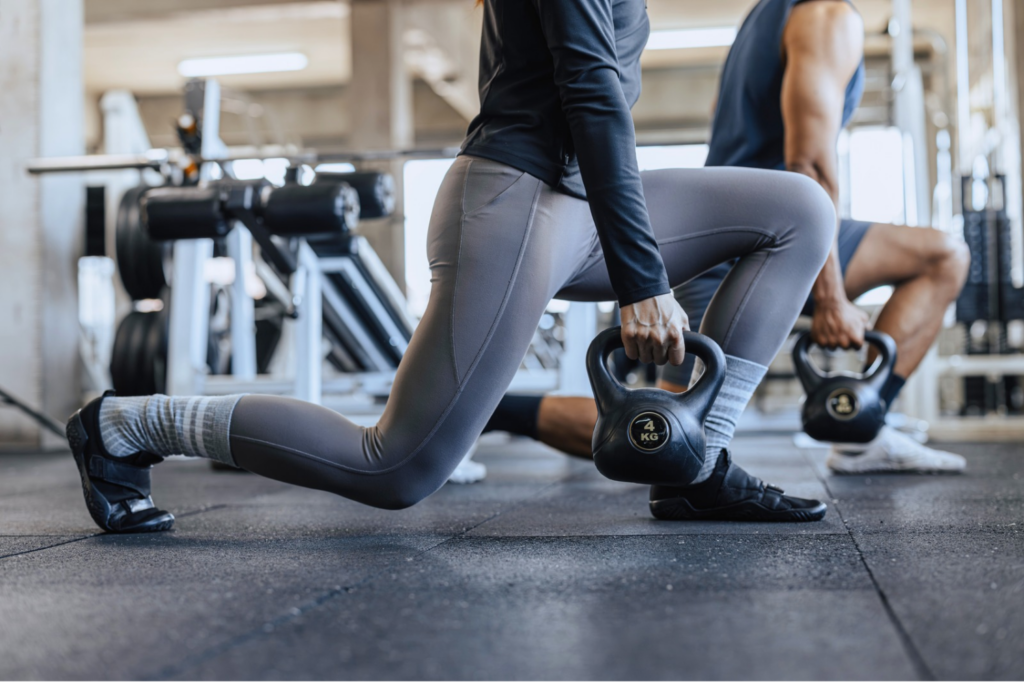
Choose a level of resistance that makes the last few repetitions demanding while allowing you to maintain your technique. Leaving a few more good repetitions in reserve is one option; you do not have to train until another repetition is impossible every time. Once the same number of repetitions becomes easy, gradually increase the weight or band resistance to keep the challenge appropriate as you get stronger.
Adjust the workload with recovery in mind
Warm up with light movement and rehearse each exercise with an easy load. Rest between sets until your breathing settles and you can perform the next set with good technique. The American Academy of Orthopaedic Surgeons’ guidance also emphasizes technique, gradual progression and recovery days between sessions working the same muscles.
Allow time to recover between demanding sessions for the same muscles. If you split your training by muscle group, adjust the workload for any muscles that still feel fatigued. Stop movements that cause joint pain and seek advice if it persists. Let your technique and training records guide you, rather than the intensity of muscle soreness.
If you have heart disease, poorly controlled high blood pressure, osteoporosis or significant joint pain, discuss suitable exercise with a healthcare professional. Stop exercising and seek prompt medical help if you develop chest pain, dizziness or severe shortness of breath.
Making it part of everyday life
Whether you are starting strength training or already exercise regularly, decide what you want to change. Knowing whether your priority is your physique or your strength can make it easier to choose what to record and how to adjust the resistance.
- Schedule exercises that work the whole body. Combine a leg exercise such as a squat with pushing movements for your chest and pulling movements for your back. Set aside training days that give the major muscle groups regular work.
- Choose resistance that matches your current strength. Select a weight or variation that makes the final repetitions challenging without sacrificing technique. As an exercise becomes easier, gradually increase the resistance.
- Track your physique and strength separately. Alongside waist measurements and how your clothes fit, record the exercises, weights and repetitions. This helps you recognize what is changing when the scale is not.
- Include aerobic activity in your week. Choose an option you enjoy, such as brisk walking, running or cycling, to develop cardiovascular endurance alongside strength.
- Plan for nutrition and sleep as part of training. Include protein sources such as fish, meat, soy foods and eggs, and eat enough to support your activity. Protect your sleep and make room for recovery when scheduling workouts.
Strength training can improve your physique and strength while supporting your health over the long term. Choose exercises and resistance that suit you, and keep paying attention to how your body changes as you train.
References
- Currier BS, et al. (2026). Resistance Training Prescription for Muscle Function, Hypertrophy, and Physical Performance in Healthy Adults: An Overview of Reviews. Medicine & Science in Sports & Exercise.
The ACSM position stand on resistance training for healthy adults. - Bloch-Ibenfeldt M, et al. (2024). Heavy resistance training at retirement age induces 4-year lasting beneficial effects in muscle strength: a long-term follow-up of an RCT. BMJ Open Sport & Exercise Medicine.
The Danish LISA trial, including strength assessments four years after the study began. - Wewege MA, et al. (2022). The Effect of Resistance Training in Healthy Adults on Body Fat Percentage, Fat Mass and Visceral Fat: A Systematic Review and Meta-Analysis. Sports Medicine.
A synthesis of randomized trials examining body composition in healthy adults. - Edwards JJ, et al. (2023). Exercise training and resting blood pressure: a large-scale pairwise and network meta-analysis of randomised controlled trials. British Journal of Sports Medicine.
An analysis of 270 randomized trials comparing exercise types and resting blood pressure. - Paluch AE, et al. (2024; published online in 2023). Resistance Exercise Training in Individuals With and Without Cardiovascular Disease: 2023 Update: A Scientific Statement From the American Heart Association. Circulation.
An American Heart Association statement on the health benefits and practice of resistance training. - Watson SL, et al. (2018). High-Intensity Resistance and Impact Training Improves Bone Mineral Density and Physical Function in Postmenopausal Women With Osteopenia and Osteoporosis: The LIFTMOR Randomized Controlled Trial. Journal of Bone and Mineral Research.
A supervised exercise trial in postmenopausal women with low bone mass. - Nishikori S, et al. (2023). Resistance training rejuvenates aging skin by reducing circulating inflammatory factors and enhancing dermal extracellular matrices. Scientific Reports.
A 16-week exercise study in middle-aged women, alongside experiments in cultured skin cells. - Gordon BR, et al. (2018). Association of Efficacy of Resistance Exercise Training With Depressive Symptoms: Meta-analysis and Meta-regression Analysis of Randomized Clinical Trials. JAMA Psychiatry.
An analysis of 33 randomized trials examining depressive symptoms. - Zhang Y, et al. (2026). Long-term resistance training with all-cause and cause-specific mortality: assessing dose-response and joint associations with aerobic physical activity. British Journal of Sports Medicine.
An observational study of 147,374 participants in three US cohorts, followed for up to 30 years. - World Health Organization. (2020). WHO guidelines on physical activity and sedentary behaviour.
International recommendations covering aerobic activity, muscle strengthening and sedentary time. - Centers for Disease Control and Prevention. What Counts as Physical Activity for Adults.
Guidance on training the major muscle groups, repetitions and sets. - American Academy of Orthopaedic Surgeons. Starting a Strength Training Program.
Advice on warming up, technique, gradual progression and recovery.